Retaining Wall Drainage & Subsoil Systems Gold Coast
Behind every lasting retaining wall is a drainage system that relieves water pressure before it can push the wall over.
Agi drain pipe and fall, Geofabric wrap, Weep holes in masonry details
Agi drain pipe and fall
Geofabric wrap
Weep holes in masonry
Your drainage systems contractor checks these details during the project review so they can scope your Gold Coast site accurately.
What drainage systems are
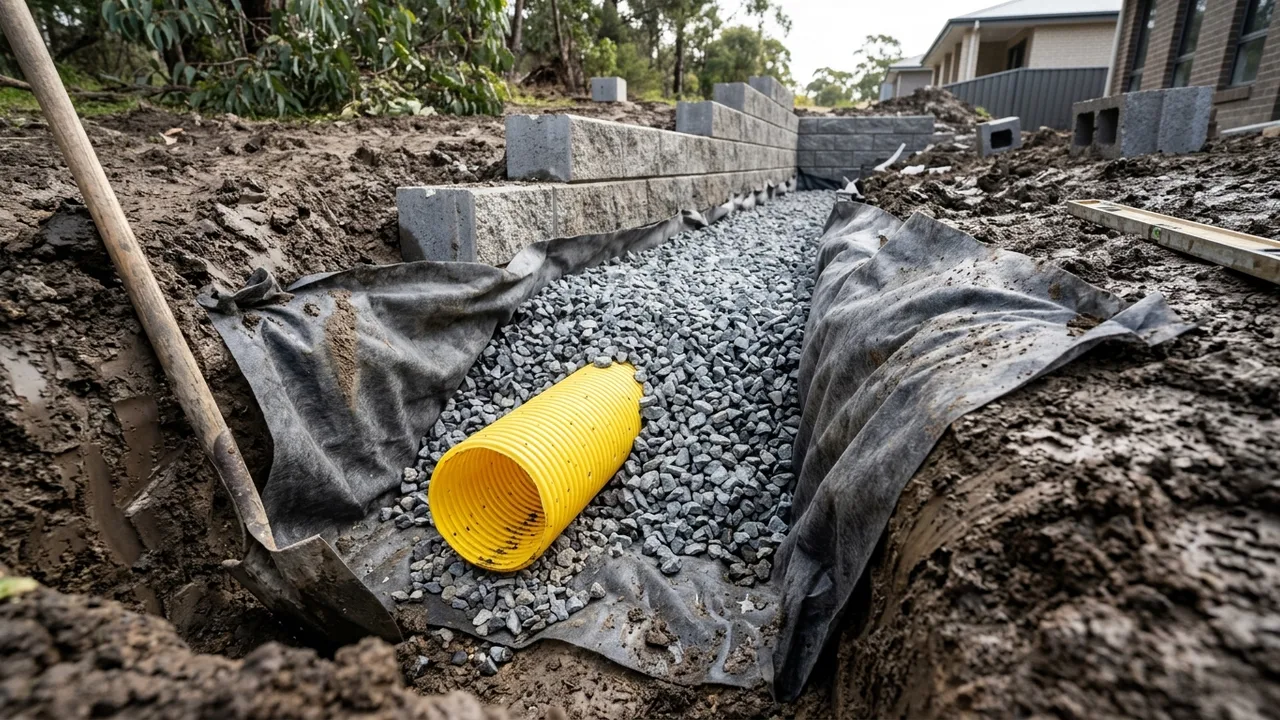
A typical subsoil drainage system includes a perforated agricultural drain pipe at the base of the wall, a blanket of free-draining gravel wrapped in geofabric, and a discharge point to the kerb or an approved stormwater system. Weep holes may be added in masonry walls.
When to choose drainage systems on the Gold Coast
Drainage is required for every retaining wall, but it becomes critical on the Gold Coast where high rainfall, sandy soils and reactive clay pockets combine. Coastal suburbs such as Surfers Paradise, Broadbeach and Burleigh Heads need drainage that handles intense downpours, while hinterland blocks need to manage slope runoff.
Cost and durability expectations for drainage systems
Drainage is usually priced as part of the wall package. Standalone drainage remediation can range from $400 to $2,000 or more depending on wall length, depth and access.
Council approval and engineering for drainage systems
Retaining-wall drainage must suit the wall system, soil and approved design. Surface and subsoil water must discharge to a lawful point without concentrating runoff onto neighbouring land. The contractor and certifier should confirm the drainage detail required for the site.
How the drainage systems process works
The contractor excavates behind the wall to the required depth, lays geofabric and gravel, places the ag pipe with a positive fall, wraps the geofabric and backfills. The discharge is connected to a legal point.
Typical Gold Coast applications
Drainage upgrades are needed behind existing timber, block and concrete sleeper walls that have started to lean or crack, and are installed as standard on every new retaining wall on the Gold Coast. Standalone drainage work is common in suburbs with reactive clay or high rainfall such as Mudgeeraba and Tamborine Mountain.
What to confirm for an accurate quote
A drainage scope needs the wall length and height, soil type, existing drainage condition, available fall to a legal discharge point, and whether the wall is being repaired or newly built. Geofabric, gravel volume and ag pipe diameter are sized from these details.
Lifespan and maintenance expectations
A correctly installed subsoil drainage system should function for the life of the wall, often 20 to 50 years depending on the pipe and gravel quality. Periodic maintenance includes clearing silt from ag pipe outlets and checking geofabric has not clogged with fine soil. Discharging the ag pipe to a legal point, not the neighbour's yard, is what keeps the wall and the relationship dry.
Retaining Wall Drainage & Subsoil Systems across Gold Coast
Behind every lasting retaining wall is a drainage system that relieves water pressure before it can push the wall over. The map below links to the Gold Coast suburbs where contractors most often quote for drainage systems.